Home / Ratings / MedicGLP

MedicGLP: What Our Verification Board Found

Category: Blood Sugar & Metabolic WellnessFormat: Capsule, 30 per bottleLast verified: September 2026
6.5 out of 10 Conditionally Verified

MedicGLP's label discloses every ingredient and every dose — no hidden "proprietary blend." The ingredients it picked also line up with real published research on blood-sugar and metabolic wellness. What holds this entry out of our top tier is simpler: several of the doses on that label are a fraction of the amounts used in the studies its own marketing points to. That's not a red flag by itself, but it is a real gap between the label and the literature, and a rating board's job is to say so plainly.

  • Full ingredient panel disclosed, with an exact milligram amount for every entry
  • No prescription drug ingredient — contains no semaglutide, tirzepatide, or other GLP-1 receptor agonist
  • !Several key doses sit well under the amounts used in the cited research (details below)
  • !Return and guarantee terms are not consistent across the brand's regional storefronts

What MedicGLP Actually Is

Product overview
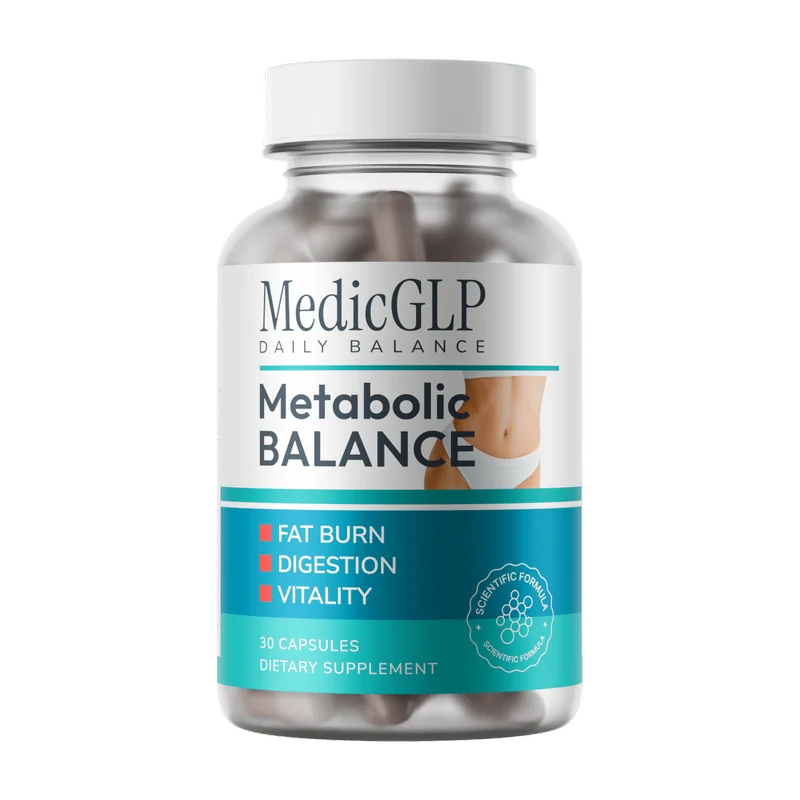
MedicGLP Daily Balance bottle, a 30-capsule dietary supplement

MedicGLP Daily Balance, 30 capsules per bottle — manufacturer product photo.

MedicGLP is a daily capsule built around chromium plus ten plant-based extracts, sold as an over-the-counter dietary supplement rather than a prescription medicine. The name references the GLP-1 pathway the ingredients are studied against, but it's worth saying plainly: this is not a GLP-1 drug. It contains no semaglutide, no tirzepatide, and no other prescription weight-management or blood-sugar medication — just a mineral and a set of botanical extracts, taken as one capsule a day with a full glass of water, during or after a meal.

One bottle holds a 30-day supply. The brand doesn't sell through a single storefront — orders route through a central .com domain and a set of region-specific pages (we found active ones serving France, Belgium, Germany and Denmark), each with its own pricing and its own checkout terms. On the French storefront we checked directly, a single bottle listed at roughly €50, dropping to about €37 per bottle on the three-bottle bundle — multi-bottle pricing being the norm for this category rather than the exception.

MedicGLP is manufactured in Europe. Beyond that general claim, we could not locate a published Certificate of Analysis or independent (non-manufacturer) lab test for this specific formula — something we note in every entry where it's missing, regardless of the brand.

The Label, Checked Line by Line

All 11 ingredients, as printed
IngredientAmount / capsuleWhat the research base looks like
Chromium (as picolinate)100 mcgThe best-established ingredient here for everyday carbohydrate and fat metabolism support; regularly used at this general dose range in other blood-sugar-support formulas.
Green tea leaf extract (EGCG)154 mgStudied for thermogenesis and insulin-sensitivity markers, but the placebo-controlled trial we reviewed used roughly ten times this amount daily (see below).
Apple cider vinegar (powder)150 mgSmall human trials link vinegar to modest post-meal glucose and appetite effects, though most used liquid vinegar rather than a powdered extract at this dose.
Berberine HCl85 mgA plant alkaloid researched for glucose-pathway and insulin-sensitivity support — almost universally studied at 500–1,500 mg per day, far above what's here.
Ginger root50 mgLong traditional use for digestion; a smaller body of research on glucose markers exists, generally at gram-level doses.
Cinnamon bark extract20 mgOne of the more-studied glucose-support botanicals, though most positive trials use 1–6 grams of whole cinnamon, not 20 mg of extract.
Bitter orange fruit extract20 mgContains synephrine, a stimulant compound. NIH's National Center for Complementary and Integrative Health flags cardiovascular caution, particularly combined with caffeine (see Safety, below).
Cayenne pepper20 mgCapsaicin source with mild thermogenic research behind it; typically a supporting ingredient rather than a primary one in this category.
Banaba leaf extract5 mgTraditional Southeast Asian glucose-support botanical; corosolic acid is the compound most studies focus on, usually at higher extract concentrations than this.
Korean ginseng5 mgBroadly researched as a general adaptogen; glucose-specific human evidence at this dose is thin.
Resveratrol1 mgWidely studied in isolation, but 1 mg is a trace amount — we found no human trial using a dose this low.

Checked Against Published Research

Where the doses and the studies diverge

The ingredient list itself is a reasonable reflection of where blood-sugar and metabolic-wellness research has been heading. A 2026 randomized, placebo-controlled trial testing berberine alongside white mulberry leaf extract and chromium picolinate in adults over 12 weeks reported a favorable safety profile and measurable changes in body composition and insulin-resistance markers. A separate randomized, double-blind, placebo-controlled trial gave adults green tea extract for 16 weeks and found reduced triglycerides and an improved insulin-resistance score by the end of the study. Both of those trials are legitimate, peer-reviewed evidence that these ingredient families are worth researching for this purpose.

The catch is dose. Neither trial used anything close to what a single MedicGLP capsule provides.

The dose gap

The 2026 trial's active group took roughly 1,000 mg of berberine a day. MedicGLP's label lists 85 mg — about one-twelfth of that amount. The green tea trial used roughly 1,500 mg of extract a day, split across three doses; MedicGLP provides 154 mg, also close to one-tenth. This doesn't mean 85 mg of berberine does nothing — smaller doses can still have a smaller effect, and combining several researched ingredients at once is a legitimate formulation strategy. It does mean that if a product page or ad implies "clinically studied" results, it's worth asking which dose that study actually used. Here, it's a meaningfully larger one than what's on the label.

Older, smaller studies on berberine's mechanism — including animal research and a couple of small human trials in people with elevated blood sugar and lipid markers — support a plausible pathway for how it might help, but again generally at multiples of the 85 mg found here. We're linking all of this in the Sources section below so you can read the primary research yourself rather than take our summary of it on faith.

Where the Label Holds Up, Where It Falls Short

Our honest split

Holds up

  • Every ingredient and dose is printed on the label — no proprietary blend hiding the amounts
  • Ingredient family (chromium, berberine, green tea, cinnamon, vinegar) matches the current research direction for this category
  • Simple regimen — one capsule daily, taken with a meal
  • Not a prescription drug and doesn't claim to be one

Falls short

  • !Most active doses are a fraction of the amounts used in the research the category leans on
  • !Refund and guarantee terms differ by regional storefront rather than one clear policy
  • !No independent lab testing or Certificate of Analysis published for this specific batch
  • !Includes two stimulant-adjacent ingredients (bitter orange, cayenne) worth a doctor conversation for some people

Who Might Consider It, Who Should Check First

Fit & safety

Might be worth a look

Someone who wants a simple, fully-labeled daily capsule to sit alongside — not replace — their existing blood-sugar-conscious habits, and who goes in understanding the doses here are modest compared to the clinical amounts used in the ingredients' own research.

Talk to a doctor first

Anyone currently taking a prescription blood-sugar or blood-thinning medication, anyone on blood pressure medication, anyone sensitive to caffeine-like stimulants, and anyone pregnant, nursing, or under 18. Bitter orange and cayenne are both mild stimulant sources; combining them with other stimulants (including caffeine) is the specific combination NIH flags for cardiovascular caution.

Our Rating Breakdown

How the 6.5 is built
Ingredient Transparency8.5 / 10

Full label, exact doses for all 11 ingredients, no proprietary blend.

Research Alignment5.0 / 10

Right ingredient family; several doses are 8–12x below the amounts used in the cited trials.

Purchase Clarity6.0 / 10

Pricing and guarantee length vary by which regional storefront you land on.

Safety Disclosure6.5 / 10

Stimulant-adjacent ingredients are present on the label; the site itself doesn't flag the interaction caution we note above.

Verification Board Q&A

Straight answers

Is MedicGLP the same thing as a GLP-1 medication?

No. It's a name reference to the biological pathway the ingredients are researched against, not the drug class itself. There's no semaglutide, tirzepatide, or any other prescription GLP-1 receptor agonist in this formula — it's an over-the-counter blend of a mineral and plant extracts.

How long does one bottle last?

Thirty capsules per bottle, one capsule a day, so a single bottle covers 30 days at the labeled serving size.

Are the ingredient doses the same as the ones used in the studies mentioned for berberine or green tea extract?

No, and this is the main thing holding the score down. Both headline studies we reviewed used considerably more of the active ingredient per day than MedicGLP's label lists. See "Checked Against Published Research" above.

What's the return policy?

It depends on which storefront processes the order. The French storefront we checked lists a 14-day right of withdrawal, standard under EU consumer law; other regional pages have advertised longer money-back windows. Confirm the exact terms shown at checkout before ordering — don't assume one policy applies everywhere the brand sells.

Who should skip this or check with a doctor first?

Anyone on prescription blood-sugar or blood-thinning medication, anyone on blood pressure medication, anyone stimulant-sensitive, and anyone pregnant or nursing. Full detail in "Who Might Consider It, Who Should Check First" above.

Check current pricing

Pricing, bundle size, and guarantee terms vary by storefront and region — confirm the specifics at checkout before you order.

See Current Price →

This is an affiliate link. If you buy through it, we may earn a commission at no added cost to you — see our Affiliate Disclosure for how that's kept separate from the rating above. Nothing on this page is intended to diagnose, treat, cure, or prevent any disease. Talk to a healthcare provider before starting any new supplement, especially if you take prescription medication.

Sources checked for this entry:

MedicGLP ingredient panel, dosage instructions, and regional pricing — manufacturer storefront (medicglp.fr), accessed September 2026.

Randomized, double-blind, placebo-controlled 12-week trial of berberine, white mulberry leaf extract, and chromium picolinate on body composition and insulin markers in adults — Nutrients (MDPI), 2026. Read the study.

Randomized, double-blind, placebo-controlled 16-week trial of green tea extract on insulin resistance and GLP-1 levels in adults with blood sugar and lipid concerns — PLOS ONE. Read the study.

Berberine's effect on glucose regulation in an animal model — PMC (National Institutes of Health). Read the study.

Berberine and insulin sensitivity in human cell and clinical research — PMC (National Institutes of Health). Read the study.

Berberis vulgaris fruit extract and glycemic control in adults — PMC (National Institutes of Health). Read the study.

Bitter Orange: Usefulness and Safety — National Center for Complementary and Integrative Health (NIH). Read the overview.